
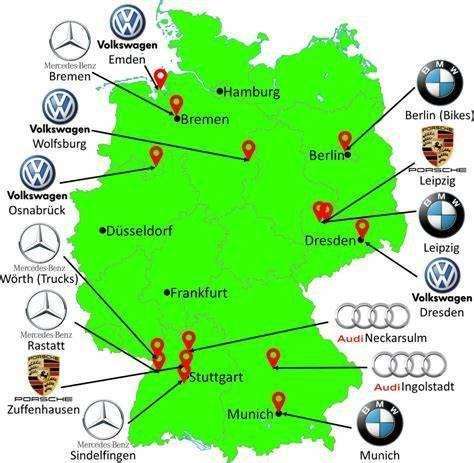
Germany’s car parts makers are hitting a familiar road at an unfamiliar speed. As the country’s car industry shrinks-pressured by shifting demand, tougher emissions rules, and a global transition toward electrification-many suppliers are turning away from the old playbook of ever-growing volumes. Instead, they’re accelerating into new markets, redesigning products for electric and hybrid vehicles, and renegotiating how they operate as margins tighten.
In this article, we look at how key parts manufacturers are “switching gears,” what’s driving their decisions, and the risks and opportunities that emerge when an established industrial ecosystem is forced to adapt-fast. From retooling factories to reshaping customer relationships, the story is less about resisting change than managing it.
– Precision supply chains under load: how German car parts makers redesign tolerances, materials, and testing as volumes fall
Germany car parts makers, car parts manufacturing Germany, automotive supply chain Germany, shrinking automotive industry, industry downturn Germany, car parts sector Germany, automotive manufacturing shift, Financial Times Germany automotive industry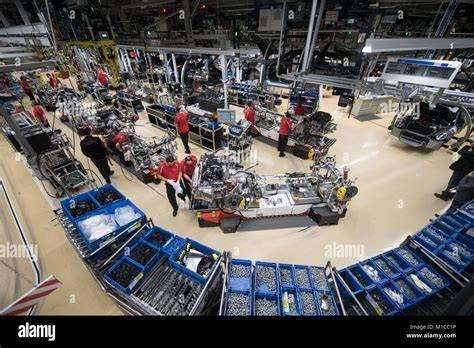
– From dashboards to duty cycles: practical restructuring moves in procurement, plant utilization, and workforce planning to protect margins in a shrinking market
Germany car parts makers, car parts industry Germany, automotive suppliers Germany, auto parts manufacturing, shrinking automotive industry, automotive sector downturn, Germany manufacturing layoffs, Financial Times Germany automotive industry
– Electrification with a retrofit mindset: trend analysis of buyers shifting toward hybrids and EV platforms, and what component firms should reposition first
car parts makers, Germany automotive suppliers, Germany auto parts industry, shrinking car parts industry, automotive manufacturing in Germany, car parts production Germany, Financial Times, Germany car industry downturn
– Case study comparisons of resilience and failure: which business models survive demand shocks, and the specific governance and customer strategy lessons to replicate
germany car parts makers, car parts manufacturing germany, automotive suppliers germany, german auto parts industry, financial times germany auto industry, shrinking automotive industry germany, industry downturn automotive suppliers, car parts sector germany, automotive manufacturing contraction
Concluding Remarks
In the quiet churn of supply chains, Germany’s car parts makers are learning how to drive in a different direction. As vehicle demand tightens and margins compress, the familiar motion-make, ship, repeat-has begun to slow. Yet the industry’s response is not retreat so much as retooling: a turn toward efficiency, new technologies, and business models built for uncertainty rather than abundance.
The switch gears underway may not be fast, but it is consequential. Factories that once optimized for predictable orders are now being asked to optimize for resilience. Engineers are recalibrating for electrification and software-driven systems, while procurement teams face a market that rewards agility and punishes delay. In this reshaping, competition doesn’t disappear-it shifts shape, moving from scale to specialization and from volume to value.
Whatever the next quarter brings, one headline remains: the parts makers that adapt-quietly, relentlessly-will play a larger role than their shrinking production lines might suggest. For Germany’s automotive ecosystem, the transition may be difficult, but it is also a kind of momentum: not the rush of growth, but the steadier momentum of reinvention.